

The public can now access the restored Assembly Hall, Committee Rooms and Council Chamber within the reopened Hornsey Town Hall Arts Centre, with each returned to its original design intent. Reimagined as destinations for culture, community and hospitality, these spaces offer flexibility for a variety of uses, including entertainment productions, exhibitions, seminars, screenings, weddings and large conferences. The Arts Centre, Assembly Loft co-working offices and ground floor co-working hub will be operated by General Projects, while AND London will curate a year-round programme of community events designed to keep the building active, supported by local traders, performers and community groups. Make has brought the town hall up to modern accessibility standards, with wheelchair-accessible routes providing equitable access throughout the building.
The principles of a ‘minimal impact’ approach to restoration have likewise informed the 68-room aparthotel design by Make for Dao by Dorsett, providing a boutique alternative to more centrally located London hotels. Aimed at people visiting family in the area, attending events at the town hall and Alexandra Palace, or visiting for work purposes (including production casts and crews), the hotel has been designed with long-stay guests in mind. Located in the same blocks as the former offices and meeting rooms, the mix of guestrooms take inspiration from the town hall’s art deco form and retain original features while also introducing other elements in sync with the wider building, including herringbone flooring. Contemporary additions, such as terrazzo worktops and pendant lighting, are incorporated into the kitchenettes and bathrooms.

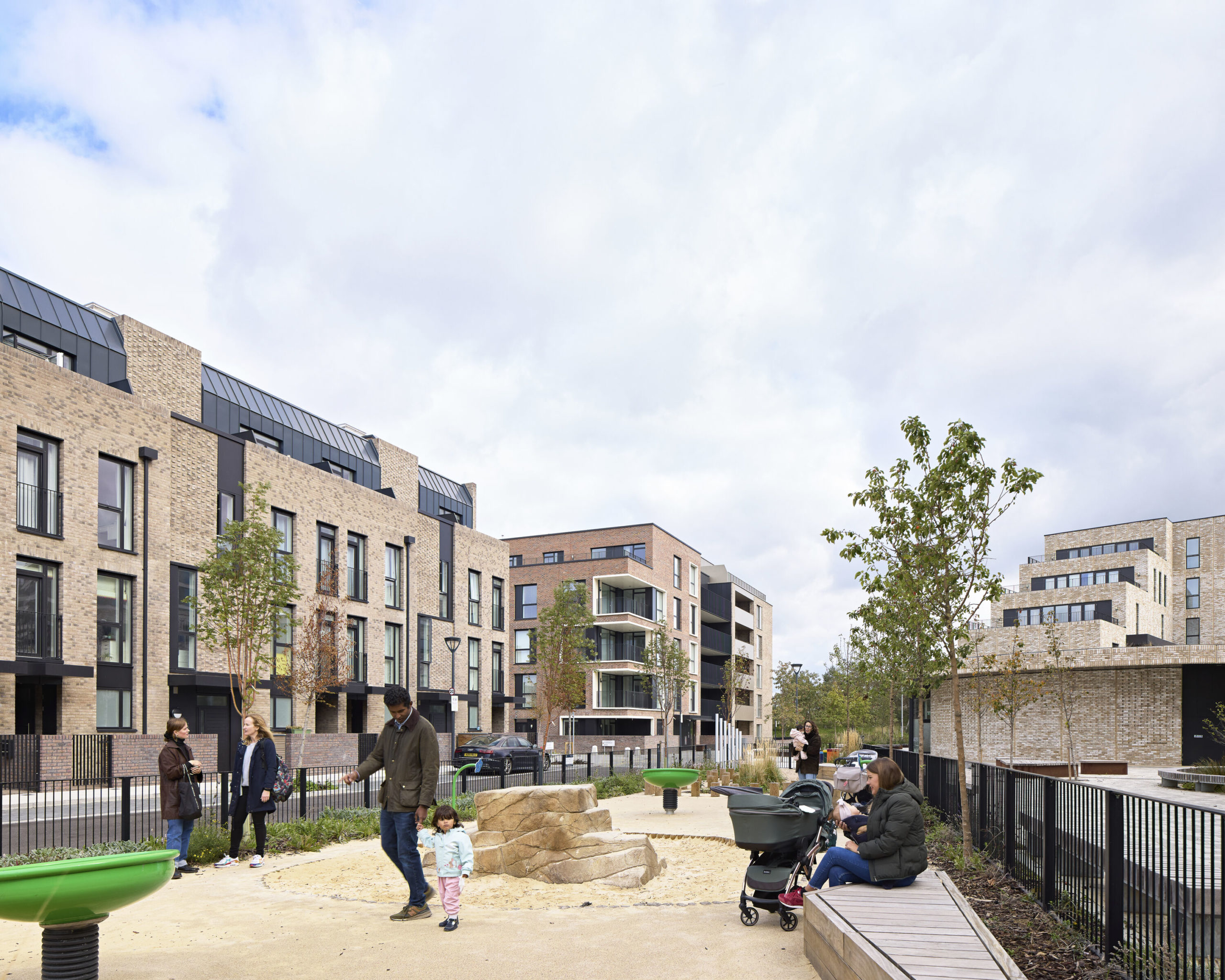
A key element of the project has been the careful landscaping of the Town Hall Square so it can host markets, fairs and festivals, including the beloved Crouch End Christmas tree. The revived square offers the widest possible use for the town hall in direct response to several public consultation sessions and meetings with various local groups. The original square fountain has been rejuvenated, while new planting, outdoor seating and green enclosures create safe spaces for children and families, encouraging play and interaction.
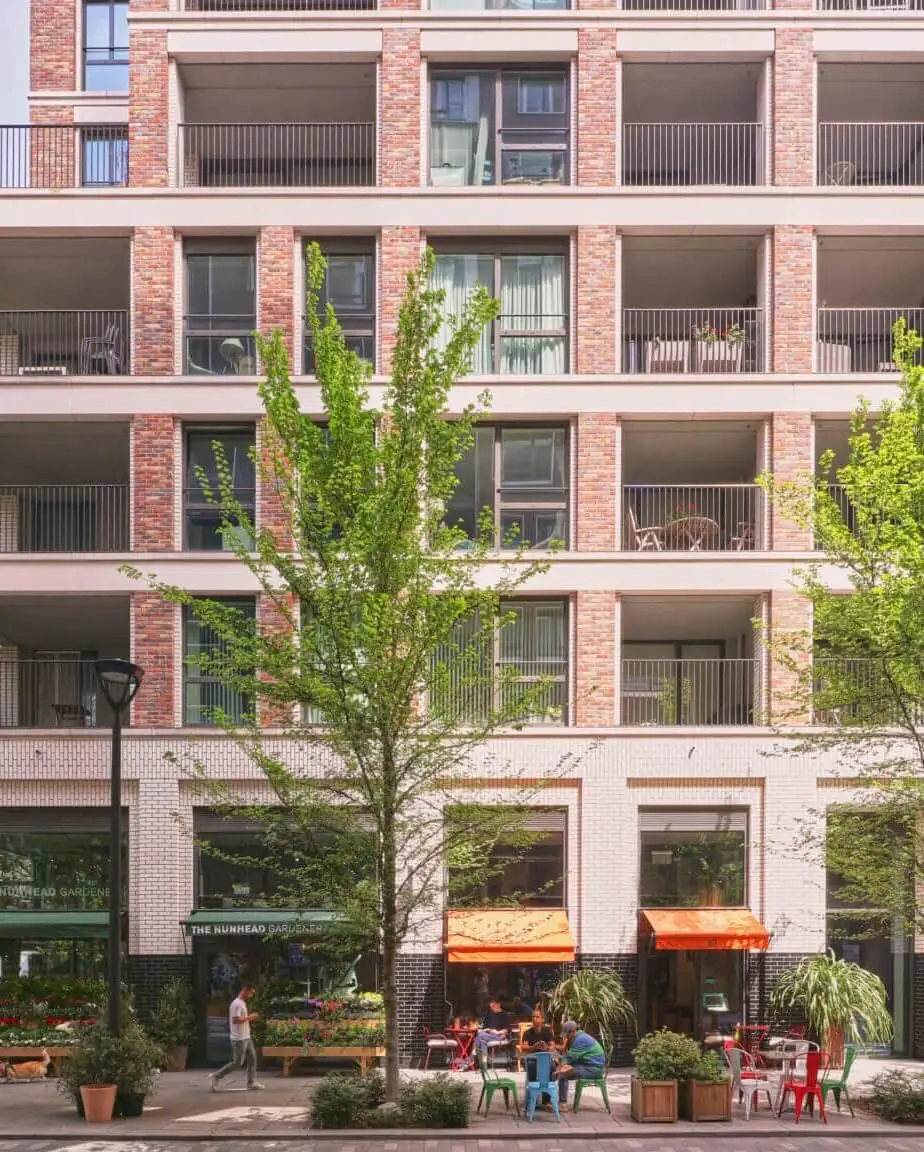
On two plots adjacent to the revised town hall quarter, Make has designed the architecture and interiors for a pair of new residential apartment blocks that together provide 146 homes, the majority of which have been bought by local residents. The Uren block references the architectural language of the town hall, as well as local residential houses, by abstracting art deco motifs in the detailing of its metal balcony balustrades and chevron timber flooring. The neighbouring Ayers block has a patterned facade relief that subtly nods to the ornate concrete facade of the Grade II-listed 1960s Hornsey Library located directly adjacent.
Communal, landscaped gardens – an essential element of Make’s masterplan for the site – mediate between the residential blocks and the town hall, establishing an urban quarter with a strong sense of permeability. The second phase of the Town Hall’s development will bring the completion of additional new spaces, including a cinema, rooftop bar and Assembly Loft co-working hub. New cafés and restaurants will open on to the Town Hall Square, further integrating this new locality into the wider area.
Through FEC and Make’s imaginative masterplanning and careful remodelling of spaces, Hornsey Town Hall has now been removed from the Heritage At Risk Register, safeguarding its long-term use and securing its future as a community asset for generations to come. Over six years of sensitive restoration, Make has delivered a thoughtful example of adaptive re-use – a careful balance of vibrant, flexible spaces that accommodate diverse community needs while remaining respectful and celebratory of Hornsey Town Hall’s civic legacy.
Katy Ghahremani, Make Director and Lead Project Architect, said: “Hornsey Town Hall been a long-running project at Make and one that has helped define our practice’s approach to social value, serving a cross-section of Crouch End, with all generations able to use and benefit from the building. Local public consultation was an important part of defining the project, ensuring we could maintain the building’s civic purpose for the modern era while also honouring Reginald Uren’s original architecture. In some ways he made that easy for us, as the bones of the building were so well designed in the first place. It has been a joy to bring his vision back to life.”
Nick Poon, Head of Projects at FEC, said: “Bringing such a culturally and historically significant building back into public use has been a huge privilege for everyone involved. This restoration has taken years of considered collaboration and care, guided by a shared commitment to do justice to the Town Hall’s heritage while giving it a new lease of life and protecting it for future generations to enjoy. The result is a place that balances history and modern amenity, but more importantly, a place where the local community can come together to work, celebrate and connect – and seeing that happen again is exactly what this project was all about.”

